

The European labour market in 2026 cannot be described simply as a shortage of workers. Economic growth remains restrained in several markets, employers are more cautious about expanding their teams, and overall demand has weakened in some sectors.
At the same time, another trend remains strong: companies continue to struggle to find people for specific occupations where experience, qualifications or practical skills are essential.
Germany and Poland illustrate this shift particularly well. Both markets show that today’s recruitment challenge is less about the total number of available workers and more about finding the right people for the right jobs.
Germany: Weaker Overall Demand, but Persistent Skills Shortages
Germany’s current labour market presents an important contrast.
In July 2026, the Federal Employment Agency described overall labour demand as weak. Nevertheless, 653,000 vacancies were registered with the agency, 25,000 more than a year earlier.
At the same time, the latest Federal Employment Agency shortage analysis, based on 2025 data, identified 157 bottleneck occupations. Shortages remain particularly visible in care and healthcare, construction and skilled trades. Professional drivers and cooks are also among the occupations where qualified employees remain difficult to recruit. Importantly, the agency itself stresses that Germany does not face a universal labour shortage: demand is concentrated in specific occupations and qualification levels.
This distinction matters. A slower economy does not automatically eliminate structural workforce shortages.
Demographic change adds another long-term factor. In July 2026, the Federal Employment Agency reported that employment growth in Germany had been driven exclusively by international workers since 2024, while more people are reaching retirement age and fewer young workers are entering the labour market to replace them.
For employers, this means that access to international talent is becoming part of long-term workforce planning rather than a temporary response to exceptional demand.
Poland: A More Balanced Market with Shortages in Key Occupations
Poland is moving toward a more balanced labour market, but this does not mean recruitment challenges have disappeared.
At the end of the first quarter of 2026, Statistics Poland recorded 100,200 job vacancies, 16.7% more than at the end of the previous quarter. The figure was broadly stable year on year, with only 800 fewer vacancies than in the first quarter of 2025.
The national Barometr Zawodów 2026 provides a clearer picture of where the pressure remains. Its forecast identifies 17 shortage occupations across Poland in 2026. Eight occupations have remained in persistent shortage for ten consecutive years.
The shortages include truck and bus drivers, electricians, installation specialists, machinery operators, welders, warehouse workers and several healthcare and education professions. Truck drivers alone are forecast to be in shortage in 326 Polish counties in 2026.
This shows why national averages tell only part of the story. A labour market can move closer to overall balance while individual industries, professions and regions continue to experience serious recruitment pressure.
Why Germany and Poland Remain Important Recruitment Markets
Germany and Poland have different economic structures and labour-market dynamics, but they share one important characteristic: employers continue to need people with specific capabilities.
In Germany, demographic change and long-standing shortages support demand for qualified personnel even during a weaker economic cycle. In Poland, manufacturing, logistics, transport, construction and other sectors continue to experience recruitment difficulties for particular occupations.
This is why the recruitment model is changing.
Employers increasingly need more than visibility for their vacancies. They need access to candidates who match the requirements, understand the working conditions, have the necessary documents and are realistically prepared to start work.
In 2026, precision matters more than volume.
What This Means for Employers
Higher unemployment or a larger available workforce does not automatically solve recruitment shortages. A candidate available on the labour market may not have the required skills, experience, location, documents or willingness to accept the conditions of a specific job.
For businesses, this makes targeted recruitment increasingly important.
The process must begin with an accurate staffing profile and continue through candidate sourcing, screening, transparent communication, employment preparation, transport and arrival.
A large number of applications has limited value if the people do not match the project or never reach the first working day.
International Recruitment Is Becoming More Strategic
The 2026 data from Germany and Poland points toward a more selective European labour market.
Companies still need workers, but they increasingly need the right workers in the right occupations. This raises the value of experienced recruitment partners that understand both candidate markets and the operational requirements of employers.
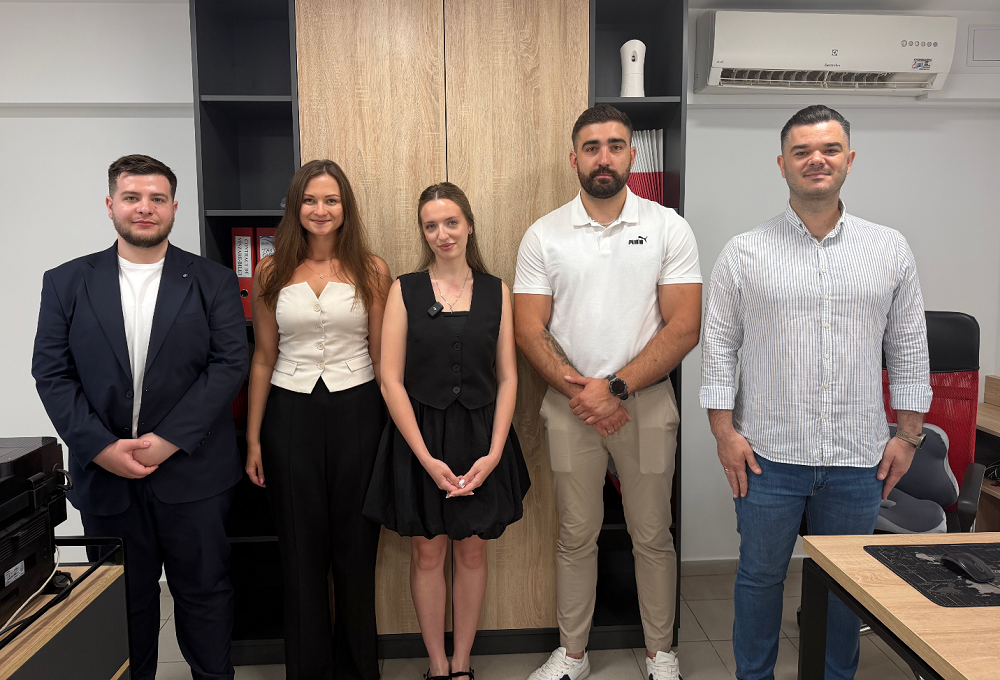
ARA brings together recruitment expertise, practical experience in European markets and a structured approach to international hiring.
For companies facing persistent skills shortages, the question is no longer simply where to advertise a vacancy. It is how to build a reliable channel capable of delivering people who genuinely match the business need.
If your local labour market cannot provide the people your business needs, ARA can help turn that shortage into a structured recruitment solution.