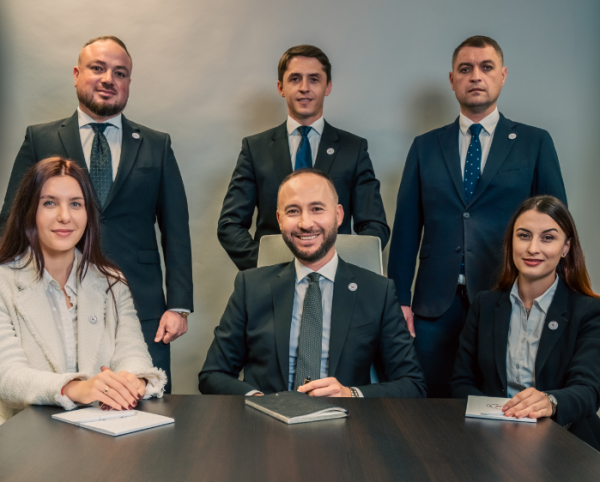

The Association of Recruitment Agencies of Moldova (ARA) continues to invest in the professional development of its team and in the quality of communication with candidates. As part of this internal development approach, ARA organized the author training #IAmANegotiator, delivered by trainer Artem Polushatov, for recruiters from across Moldova.
The training brought together recruiters working in different regions of the country and focused on one of the most important skills in recruitment: the ability to communicate clearly, ask the right questions, present value correctly, and lead a conversation toward a real result.
The idea behind the programme was simple but important: words create events. In recruitment, this is especially true. The way a recruiter builds a conversation influences trust, interest in the vacancy, and the candidate’s decision to move forward in the hiring process.
Why this Training Matters
For ARA, recruitment quality depends not only on access to vacancies or candidate flow. It also depends on the quality of dialogue between recruiter and candidate.
A strong recruiter must be able to do more than provide information. They must understand the person, identify the right motivation, present the offer in a convincing and honest way, and guide the conversation toward a practical outcome.
That is why negotiation skills are a direct part of recruitment quality.
Confidence and Mindset of the Tecruiter
The first training module focused on the mindset and confidence of the company representative — the recruiter who does not simply describe a job, but presents a real opportunity and builds trust during the conversation.
Participants worked on how internal confidence influences communication, how a recruiter’s position affects the candidate’s response, and how to speak as a strong, clear, and professional representative of the company.
This part of the programme was especially important because confidence in communication often determines whether a candidate stays engaged in the process or loses interest at an early stage.
Presenting the Value of Work Clearly
The second module focused on how to present the benefits of working both with the company and with its representative.
For recruiters, this is a key practical skill. A vacancy is not sold by listing facts alone. A candidate needs to understand the real value of the offer, the advantages of the employer, and the role of the recruiter in helping them navigate the process.
This module helped participants work on clearer and more convincing ways to explain why an offer is worth attention.
Profiling and Question Techniques
A separate module was dedicated to profiling and question techniques — one of the most important parts of quality recruitment communication.
During this part of the training, participants worked on the questions that should be asked in the most important areas, including:
- health condition;
- work experience;
- what is important for the candidate to have at the workplace;
- what is not acceptable for the candidate at work.
This approach helps recruiters better understand the real profile of the person, assess suitability more accurately, and reduce mismatches already at the early stage of recruitment.
Selling for Results
Another important module focused on the technique “Selling for Results.”
During the practical part of the training, participants worked on several current vacancies and practiced how to structure communication in a way that leads not only to interest, but to action.
This is especially important in recruitment. It is not enough to describe a job offer. A recruiter must help the candidate see the value of the opportunity, understand the conditions clearly, and move toward a decision based on trust and well-structured communication.
Practical Value for Daily Recruitment Work
At the end of the training, participants received feedback and a practical homework task to help them apply the tools in real conversations with candidates.
This made the programme not just informative, but directly useful for daily work.
For ARA, such trainings are part of a systematic approach to internal development. A strong recruitment team is built not only through experience, but also through continuous learning, stronger negotiation skills, and a deeper understanding of how to build effective communication with people.
ARA is confident that investment in recruiter development directly improves the quality of selection, strengthens candidate trust, and supports stronger overall performance.
That is why team training remains one of the important directions of ARA’s internal growth.